Sunday, December 18, 2005

Restaurant 74: Tempo Doeloe (Amsterdam, The Netherlands)


RESTAURANT: Tempo Doeloe
LOCATION: Utrechtsestraat 75 Amsterdam, The Netherlands
DATE: September 17, 2005
FOOD: Nasi Koening - Indonesian festive dinner with yellow rice and the following dishes: Sajoer Lodeh, Ajam Opor, Ora Arie, Daging Semoor, Paksoy, Godon Dari Sapi, Sambal Goreng Beans, Sambel Goreng Oedang, Sambel Goreng Tempeh, Oerapan, Ajam Roedjak, Sateh Ajam
BEVERAGE: Bentang (Indonesian Beer)
PRICE: 32 Euros

Thai is known for the fiery intensity of its sauces. Chinese Dim Sum is a kaleidoscopic view into the cuisine’s diversity of small plates. Indian shares the heat of Thai, but its spiciness is more upfront, its bread, rice, and meat combinations with a distinctly contrasting heat to that of Bangkok. Vietnamese food is lighter, often based around soups and noodles; Malaysian is a conglomeration of exotic sensations. Then there’s Pakistani, Afghani, the stewed meats of Himalayan and Tibetan, not to mention the beautiful simplicity of Japanese. Asian cuisine presents seemingly endless possibilities, few, if any, which when prepared in authentic style could ever bore a diner.

And then there’s Indonesian. Though uncommon in the United States, the Netherlands, especially Amsterdam, has embraced rice tables and gado gado with the famous Dutch open-mindedness. For every canal in the city, there appears an Indonesian restaurant to match. The question is which restaurant is the best.

Tempo Doeloe has accrued a reputation as one of (if not the) premier destination for the art of Indonesian. Situated in a posh street in the city center, the restaurant’s name means “Old Days” and to enter, patrons must ring a bill before the hostess grants them admittance. The effect of this procedure is less pretentious than one might expect and shows more about the seriousness with which the restaurant prepares their dishes. Walking into Tempo Doeloe is like stepping into a culinary sanctuary – while the ambience is courteous and inviting, chefs prepare and waiters serve meals with a disciplined attention to detail.

While the menu offers both appetizers and entrees a la carte, it’s the tasting menus, specifically the rice tables that are Tempo Doeloe’s most popular options. The full rice table consists of over 20 petite dishes, while there are also two smaller and less expensive meat and vegetarian tables. The large one contained five beef dishes, making the nine-course meat table more appealing to me.

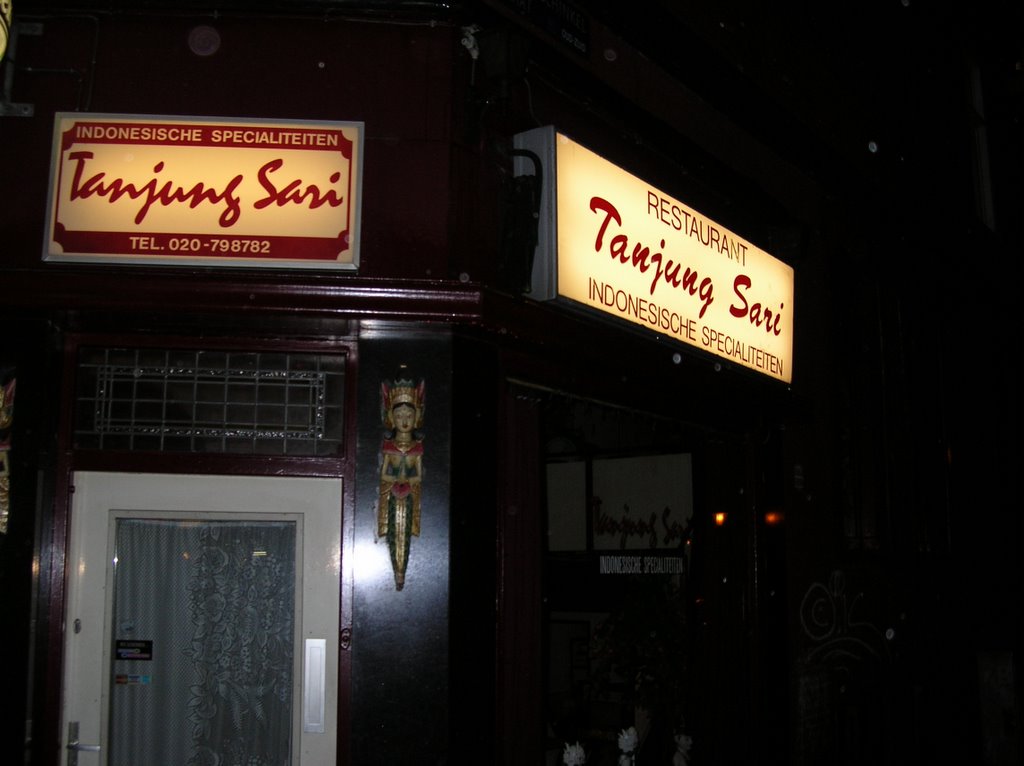
Tempo Doeloe took the foundations Tanjung San had laid and did to them what Frank Gehry’s brilliance did for Minnesota’s architectural scene – namely expanded it and caused the basic to flourish. From the night’s initial bite to its cessation, every flavor was enhanced, every course offering insight into new worlds. This started with prawn and rice crackers, Indonesian snacks which Tempo Doeloe easily could have overlooked without sacrificing the pleasure built by the entire meal. But the two types of crackers exploded with crunch and the refusal to submit to the mundane. The rice was a cross between gourmet potato chips and rice cakes, while the prawn crackers dazzled with their oyster cracker like thickness and traces of shrimp.

A chicken skewer in peanut sauce announced the opening of the meal in full. The peanut sauce was astonishingly singular, a true feat considering how many version of peanut sauce are available. It had the hue of rich chocolate and a similar viscosity. It coated the tongue with a marvelous blend of sweetness and the natural salty cream of peanut butter. The sauce was close to a nut gravy and for it alone, Tempo Doeloe is a master restaurant.

The rijstaffel then descended in all earnest, including a notable pot of baby shrimp in red pepper broth. Holders contained cabbage, cucumber, and tomato courses which though distinct in their own right, were linked b y the heavy application of vinegar in their sauces. A chicken dish illustrated the milder side of green curry, the aromatic tang of cilantro mixed with meat in a dynamic fusion. A pork dish mirrored Himalayan Yak’s stewed goat. It was a personal Indonesian buffet, mounds of yellow rice with friend and green onions serving as the starchy platform for the spectrum of flavors. Even the toasted coconut, mixed with peanuts, was above and beyond the ordinary.

With such successes, Tempo Doeloe might seem a culinary utopia. Yet for all its triumphs, its lone failure was also a huge cause for complaint. The spice levels at Tempo Doeloe purportedly attain Gobi desert temperatures, yet for all the hype, none of the dishes in the rice tables exhibited anything more than the mere building blocks of concentrated heat, a true disappointment I must say. Thus, a meal bordering on the sublime, was unable to take the final step. Tempo Doeloe was a fantastic experience, the rice table a breadth of new marvelous tastes. But with the spice levels turned down to low, an essential ingredient of Indonesian cuisine went missing. However, the lack couldn’t strip the meal of its otherwise delicious combinations, and for that, Tempo Doeloe was worth every Euro.

RATING: 8.0/10

Restaurant 73: Vlaam Frites (Amsterdam, The Netherlands)


RESTAURANT: Vlaam Frites
LOCATION: Amsterdam, The Netherlands
DATE: September 16, 2005
FOOD: Fries with Green Peppercorn Mayo
PRICE: 2.50 Euros

It’s extraordinary that the Dutch people are so thin considering the fried food cornucopia that is part of their culture. However, they do have junk food down to a science. Fries with one of a myriad of dipping sauces are available all over Amsterdam. Though mayo and curry ketchup are the standard flavors, green peppercorn mayo was an interesting alternative. It tasted like steak au poivre in liquid form. Peppery, but not spicy, it would have been better if the taste of pepper was stronger and that of the mayo more subdued. As for the fries themselves, crunchy but flavorless, a small order killed any desire to eat fries for countless days to come.

RATING: 3.0/10

Saturday, December 17, 2005

Restaurant 72: Tanjung San (Amsterdam, The Netherlands)


RESTAURANT: Tanjung San
LOCATION: Amstelveensaweg 156, Amsterdam, The Netherlands
DATE: September 16, 2005
FOOD: Rice Menu with Curried Lamb, Coconut Relish, Pickled Vegetables, Sliced Cucumber, Spiced Green Beans, Soy Sauce Tofu; Sambal Goreng Telor (Egg in Tomato Sauce); Krupuk Crackers
BEVERAGE: Tap Water
PRICE: 10.50 Euros

It is commonly known that the Netherlands resides below sea level. The canals and windmills may make nice postcards, but they serve the more important purpose of preventing the nation from sinking into the North Sea. However, with the onslaught of rain battering Amsterdam the night of September 16, it seemed only Noah’s Ark could keep the city from drowning.

Danny and I had spent nearly an hour and a half searching for a vegan restaurant with three euro dinners. When we finally found the place, the owners politely informed us it was only open three days a week. Thursday wasn’t one of them. Dejected and hungry, Tanjung San appeared like a wet mirage up the street.

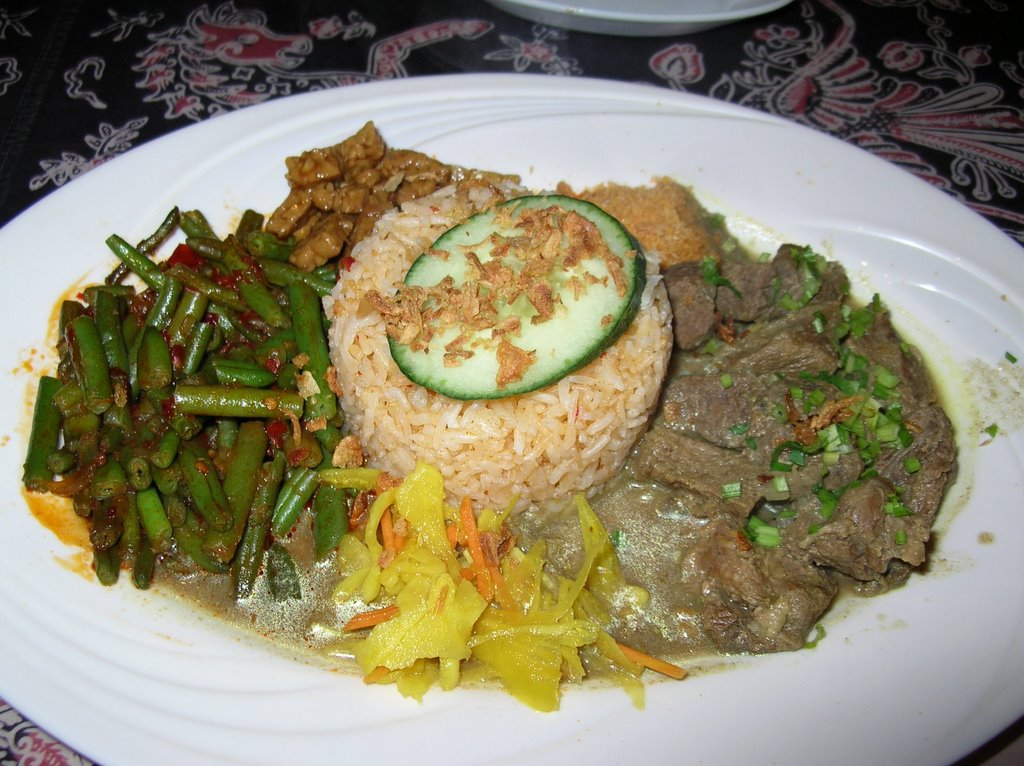
Indonesian food and Amsterdam are as synonymous as the city and coffee shops, but only the former will reduce one’s appetite. Neither of us had tried the cuisine previously but Tanjung proved a memorable introduction. We both ordered combination rice plates and the flavors ran as wild as a naked toddler on a Slip ‘n Slide. The meal started with the wafery crunch of Krupuk crackers, delectably puffy and hinted with tangy shrimp. My main plate was suffused with food. The green curry lamb was exotically spiced but not hot, the curry integrated deliciously into the chunks of meat. The toasted coconut added a cascade of sweetness to the proceedings and a bite of meat, coconut, cucumber and rice was enough to convince me Indonesian food needs to become as ubiquitous in America as Chinese take-out and our disinterest in Arena League Football.

The green beans and red peppers raised the heat of the meal, but in a very composed manner. It wasn’t a light your mouth on fire after one bite heat, but a gradual, almost sexual build. Cold tofu in soy sauce was more chicken than vegan, meaty and substantial. A separate order of hard-boiled eggs in a tomato sauce with the consistency of sweet-n-sour sauce highlighted a link to Chinese, but showed how Indonesian goes off in a more complex direction. The tomato sauce was all things at once, sweet, spicy, almost like a thin jelly. But most importantly, it tasted sensational.

Usually first impressions are marred by awkwardness and noticeable silences. In my initial encounter with Indonesian cuisine, there was no room for quiet, every forkful referencing other Asian cuisines while maintaining a uniqueness all its own. The new acquaintance had left me enamored. Enough so in fact, that Tanjung San became the warm-up act for the premiere Indonesian restaurant in Amsterdam. Two days later I was to experience Templo Doeloe.

RATING: 7.4/10

Friday, December 09, 2005

Europe 3: A Taste of The Netherlands


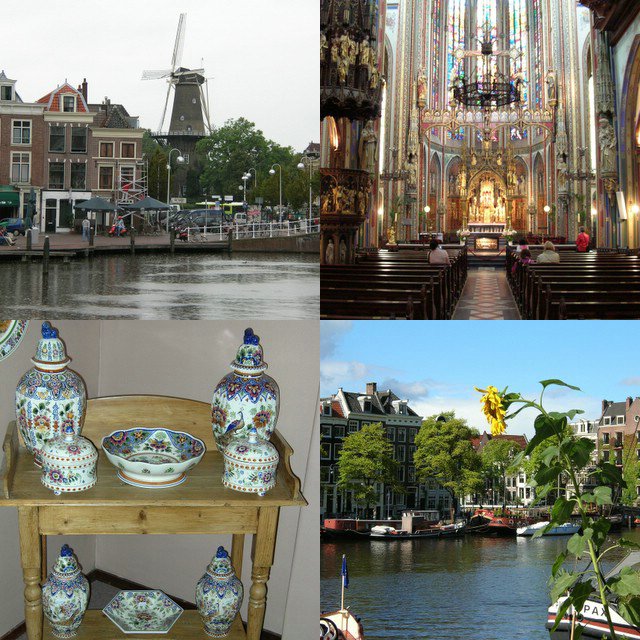
Clockwise from top left: The Falcon windmill in Leiden; St. Xaiver church in Amsterdam; One of Amsterdam's countless canals; Delft china


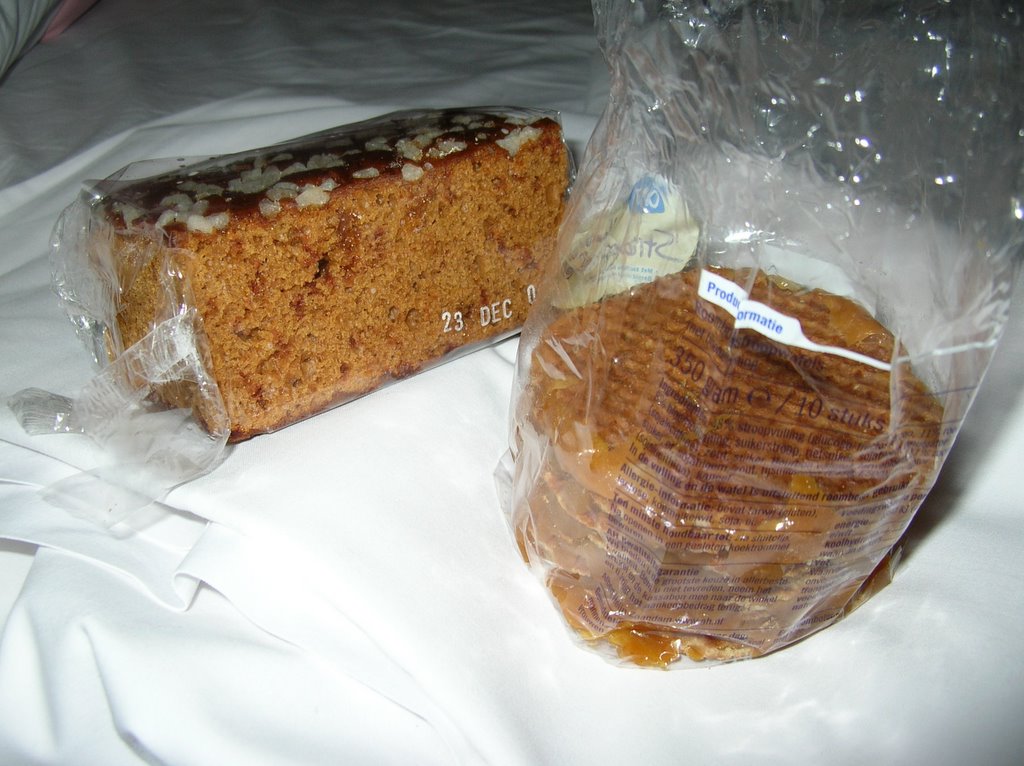
Spice bread and Stroopwaffels


A TASTE OF THE NETHERLANDS

PLACES AND DATES: Rotterdam – September 13, 2005;
Amsterdam – September 14-17, 2005

DAY TRIPS: Leiden – September 15, 2005: Leiden is like a Dutch Oxford. A quaint and pretty town about thirty minutes outside of Amsterdam by train, Leiden is home to multiple universities and close to 20,000 students. The town’s bakeries present a wealth of enticing options, even a multi-grain croissant. The Van Delk (meaning Falcon) is a fully restored windmill open for tours. It costs just 2.50 Euros and gives a reaonsable history of the functionality and utility of windmills in Dutch culture. But the town’s system of canals are the main draw, less crowded than Amsterdam, and surrounded by a mix of Dutch and English architecture. A half-day visit is a great way to gain a sense of how the non-coffee house Dutch live.

Delft – September 16, 2005: You can see the two factories where Delft china is still made. Every piece if made by hand during and the process is amazingly laborious.

HOSTELS: Rotterdam – Stayokay Hostel

Amsterdam – Flying Pig Palace – Cheap bar with a nightly happy hour, free internet and breakfast and a surprisingly reasonable noise level.

SITES: Rotterdam – Erasmus Bridge is an incredible sight and a symbol of Rotterdam’s prestige as the world’s largest port.

MUST SEE IN AMSTERDAM: Anne Frank House; St. Xavier Church – Interior is an astonishing piece of Baroque art at its pinnacle; the interior includes gilded statues, kaleidoscopic stained glass and an altar that is a testament to how faith can instigate great art; Albert Cuyp Market – Everything is for sale here. Fabrics to incense, to authentic Dutch cuisine (herring broodjes, stroopwafels) along with fresh fruit and veggies, cosmetics and pharmaceutical products. It’s a vibrant strip of Dutch life with the beautiful drowsy branches of willows overhanging the street and children galore.

FOOD: Rotterdam – Incredible mix of African and Asian cuisines

Amsterdam – Indonesian cuisine (reviews to come); Stroopwafels – Sweeter than a Halloween candy bag, these paper thin waffles come in hefty sacks and are filled with a layer of either caramel, honey, or butter syrup. Delicious in small quantities but addictive enough to cause consumption of an entire bag, ending inevitably in stomach aches and a desire to swear off all sweets forever more; Spice breads – Rather flat tasting. Heavily flavored with cinnamon and nutmeg, the bread is too dense, feels like a brick, and would be well-served by nuts or dried fruits to break up the thickness. Beware, those aren’t nuts on the top of the bread, they’re pieces of rock sugar.
Posted by Picasa

Restaurant 71: Maoz (Amsterdam, The Netherlands)


RESTAURANT: Maoz
LOCATION: Five Locations Throughout Amsterdam
DATE: September 14, 2005
FOOD: Falafel with unlimited salad bar
BEVERAGE: None
PRICE: 3.50 Euros

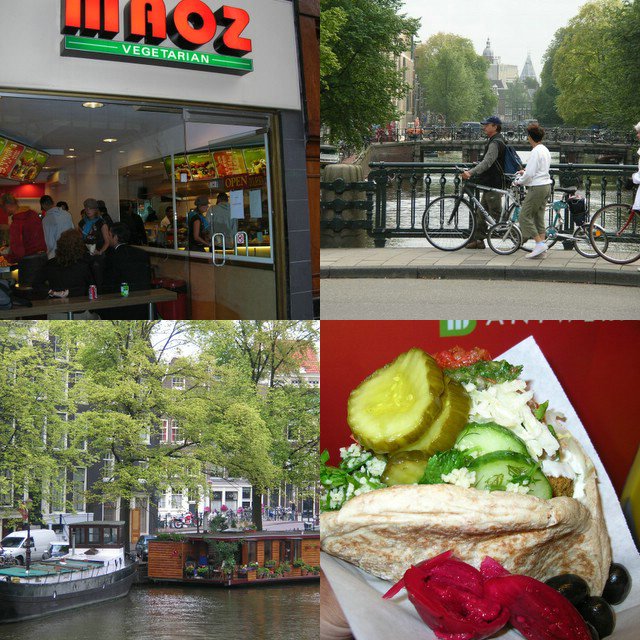
When it comes to the art of the cheap eat, perhaps no food better satisfies both stomach and wallet than falafel. The idea of frying ground chick peas is simple enough but a successful falafel rests on the spices used in the process. In New York, Alfanoose has perfected the recipe. But in Amsterdam, we were dealing with uncharted territory.

We had discovered the Maoz chain while in Madrid and been delighted by the backpacker friendly price and unlimited, free salad bar. As Amsterdam is the home of the chain, we decided to give it another go, as it’s hard to beat a 3.50 Euro dinner.

Five large pieces of falafel, prepared just moments before, crowded into the cushy envelope of a whole wheat pita. The falafel had the crunchy exterior all good falafel should have. While the predominant spice was parsley, there was still enough variety of flavors to keep the falafel interesting. Maoz’s falafel might not be on par with Ataturk’s regime, but it’s far better than the Ottoman Empire’s final triad of hapless pashas. What makes Maoz so appealing is the salad bar. Nothing is spectacular, but my love of olives and beets found satiation. The carrot and tabouleh salads were delicious and the butter pickles, downright outstanding. Combine that with sauces ranging from yogurt dill to tahini to hot sauce, and Maoz was a fantastic break from our normal pork based diet. The only US location is in Philadelphia and if I ever have the misfortune to find myself in the city of brotherly love and the last place Eagles, I might have to chow down on some falafel instead of a cheesesteak.

RATING: 6.3/10
 Posted by Picasa

Thursday, December 08, 2005

Restaurant 70: Le Dix Vins (Paris, France)


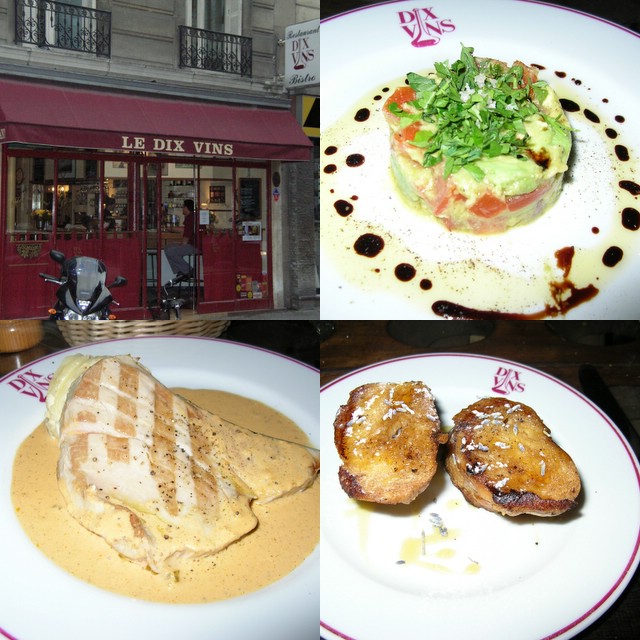
Clockwise from top left: Dix Vins in Paris; Avocado Terrine; Lavender French Toast; Grilled Tuna

RESTAURANT: Le Dix Vins
LOCATION: 57, rue Falguiere, Paris, France
DATE: September 12, 2005
FOOD: Terrine d’avocats aux herbes; Steack de thon et la crème aux poivrons doux; Lavender French toast
BEVERAGE: Water
PRICE: 26.40 Euros

It was like dining in a cliché. Dinner at a Bistro in Paris – what more could a foreign tourist crave? The Eiffel Tower at night? Already seen it. Timeless works of art? Already examined courtesy of the d’Orsay and Pompidou. So what was left of the stereotypical Parisian experiences other than bistro fare?

So the first of our four great meals was upon us (one for each month we would travel). With meals in Amsterdam, Rome, and Barcelona still to come, Dix Vins, voted as the best bistro with a menu under 30 Euros by a leading Parisian food magazine, heralded a break form the cheese and meat sandwich diet we’d been surviving on for weeks on end. For once, we’d throw expenses to the wind and indulge in Dix Vins’s 24 Euro, three course menu.

Located in Montparnase, south of the Latin Quarter on the city’s Left Bank, Dix Vins interior exhibited the same simplicity French bistro cuisine is known for. There was a small wine bar and a scattering of baskets and paintings on the walls. Nothing flashy, nothing to indicate this was one of the city’s most affordable gastronomical pleasures.

The menu was written on a chalkboard. Five selections, including three terrines, pate and a vegetable flan for the appetizers, while the main courses consisted of three varieties of steak and a grilled tuna. Dessert was a choice of a lemon tart, chocolate mousse, or lavender French toast. Aside from the beef dishes, the menu was thoroughly appealing and I would have been happy ordering anything.

I started with a terrine of avocado and herbs. While not a bad decision, Danny’s peppery house pate and the beautiful vegetable flan would surely have both been better choices. The avocado terrine was like a refined guacamole. Nicely matched with quarter sized tomato chunks, the avocado was pert and tender, hinted with olive oil and balsamic vinegar. And though the medley of herbs crowning the terrine blended mild parsley with the more forceful bliss of fresh cilantro, in the end, the terrine was too simple for its own good. More robust spicing, from the basic pepper and salt it lacked, would have helped make the dish something greater than ordinary. As it was, there was nothing remarkable, nothing to suggest the heights of French cuisine.

By appearances alone, the tuna entrée promised better results. The steak was thin, seared to the appetizing off-white color of grilled chicken. Accompanied by potatoes au gratin and a sea of red pepper cream sauce, the plate barely made it to the table before my fork sliced into the fish. For the most part, my excitement was justified by the taste. The cream sauce was magical, lighter than lobster bisque but sharing that soup’s velvety richness. And the potatoes were by far the pinnacle of the meal’s savory courses. Firm, yet in the same instant miraculously pliant, the potatoes dazzled, along with the creamy cheese coating them. The slices were as smooth and mouthwatering as fondue. I especially appreciate the bold pairing of fish and potatoes, a combination I’d only seen once before at King Louis' in St. Louis. Yet the tuna itself was a tad dry and stringy, the result of overcooking. The course had come so close, but like reading Moliere in translation, there were just some elements that would never be perfect. Again, I had to add pepper and salt, something I’m not in the habit of doing. Thus, while I respect the fundamental simplicity of bistro fare, it shouldn’t give a chef carte blanche to dramatically under-season.

Only with dessert did Dix Vins finally present a taste both distinctly French and universally spectacular. In the lavender French toast, everything worked. The bread consisted of two thick baguette slices, grilled so the ends had an attractive char, while the interior retained a cushy chew. This wasn’t your IHOP French toast and they were far superior to even Wylie Dufresne’s French toast dessert at WD-50. Resplendent syrup was sprinkled over the bread, like a superior French honey. Full lavender seeds added an unusual flavor that was less about sweetness than about the garnering the same satisfaction one gets from the smell of fresh flowers. All in all, the dessert was exactly what I’d hoped the entire dinner would be.

If I lived in Paris, I’m certain Dix Vins would be a favored haunt of mine, the ideal restaurant when gourmet is too much and grab and go too little. The menu changes daily and no doubt, I’d have many a memorable meal. But strictly on my one visit, the restaurant was far from perfection. There were promises everywhere but to be truly satisfying, a meal must have more than unfulfilled potential.

RATING: 7.0/10

Tuesday, December 06, 2005

Just Desserts 16: Berthillion (Paris, France)


RESTAURANT: Berthillion
LOCATION: 31 Rue St. Louis En L’ile, Paris, France
DATE: September 18, 2005
ICE CREAM: Cone with a scoop of fig and a scoop of honey nougat; mini chocolate fondue; cup with scoop of hazelnut and a scoop of tiramisu, topped with Chantilly crème
PRICE: 7.60 Euros

Notre Dame Cathedral and its centuries of significance tower in the background. Pont Neuf, inspiration for Renoir and impressionists galore, is a ten minute walk west. Yet on the Rue St. Louis En L’ile, a line has formed. It isn’t history the crowds have come to see, but rather ice cream they’re longing to taste.

Located on the island in the Seine directly east of Notre Dame, Berthillion Ice Cream has made a name for itself, gaining in Napoleon like prominence with the publication of each new tourist guidebook. Yet ,despite the prestige, the scoopers still smile, the prices remain reasonable, and the product itself, is sinfully scrumptious.

The fig sorbet was as sweet and juicy as the fruit, bits of seed furthering the illusion one was enjoying the freshly picked and not the freshly creamed. However, the honey nougat, like Baklava cream in a cone, literally caused me pause, so subtle was its sweetness, so multi-faceted its flavors. The honey and cream played a boisterous game of cat and mouse, each taste emerging and then re-emerging as the ice cream melted on my tongue.

But once tasted, a solitary cone wouldn’t suffice. On my second go-round, the tiramisu proved the French do understand Italian, tiny chocolate morsels strewn throughout an ice cream bursting with rum and cocoa flavorings. The hazelnut was too straightforward and slightly disappointing, the only ice cream of the afternoon that wasn’t ebulliently original. However, the mantel of Chantilly cream adorning the cup’s two scoops more than made up for the hazelnut’s failings. This was the way all whipped cream should be, airy and deceptively vanilla, sugared, but not sweet. One last indulgence was the mini-chocolate fondue, a near perfect dark chocolate replica of the Modern’s spectacular chocolate soufflé. The cake was pure chocolate, pure, rich, and intense, chocolate for chocolate’s sake. Nothing interfered with the chocolate’s statement. It mirrored Berthillion’s achievement. The crowd’s may flock and the traveler’s handbooks advise, but in the end, none of those things overshadow the greatness of the desserts.

RATING: 8.7/10

Tuesday, November 22, 2005

Restaurant 69: Ti Jos (Paris, France)


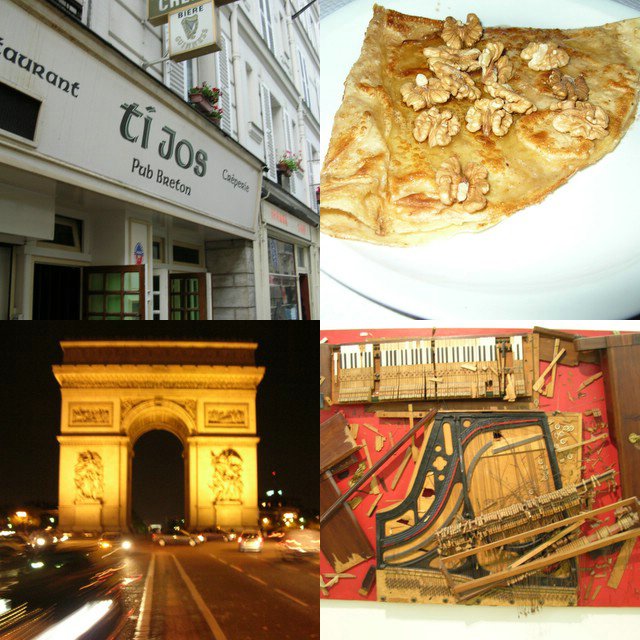
Clockwise from top left: Ti Jos; The crepe walnut and honey; A piece of art from the Pompidou; The Arc at night.


RESTAURANT: Ti Jos
LOCATION: Rue Delambre, 14e, Paris, France
DATE: September 9, 2005
FOOD: Split a Galette Champignons, Jambon, Fromage; Crepes Miel, Noux (Honey and Walnut)
DRINK: Tap Water
PRICE: 9.00 Euros

Ah, but what would Paris be without its food? Perhaps romantic, perhaps historic, but certainly less satisfying in a very immediate way. It’s the cuisine that puts us in France and the food that puts France in us. Without the patisseries and cafes, the baguettes and chocolate, Paris would be less than what it is and for this, we’d all suffer from the loss.

But, fortunately, the French culinary tradition is alive and well. And while nouveaux American cuisine has bogarted much from its European ally and cross-pollinated it with other world flavors like Mendel and his flowers, the taste of authenticity and un-tampered with classic French cuisine still can defrost even the worst of transatlantic tensions. What food better exemplifies French cooking than the crepe? Ti Jos, a creperie and cider restaurant, excels at making traditions relevant. The crepes are created by a woman advanced in age but also in culinary skill, and who by all appearances, could very well pass for Whistler’s mother. The clientele are locals, a well-needed respite from the discordant American voices heard ubiquitously all over the city.

But the crepes, the crepes are the thing themselves. Street vendors may sell more common, inexpensive versions, but to sample the real deal, Ti Jos is the place. The menu is divided into galletes and crepes, the gallettes consisting of a buckwheat base and filled with savory items like beef, cheeses, and ham, whereas the crepes are all sweetness, all the time.

We began by splitting a ham, cheese, and mushroom galette, and while the ham was nowhere to be seen (Whistler’s mom has a lot on her mind), the galette was still densely rich and brilliantly smooth. The mild coat of gruyere cheese enhanced the smoky aspects of the sautéed, though still firm mushrooms. Nothing was overcooked and all blended together seamlessly in a galette, that though grain based was nonetheless effortlessly light.

For dessert, there was no splitting. My honey and walnut crepe was a commendable dessert, though it would have worked nicely for a petit dejeuner as well. The walnuts came whole, topping the honey glaze of the crepe. The honey was effectively sweet without being birthday cake saccharine. However, the crepe itself, slightly chewy, thoroughly moist and in all ways outstanding, proved why Ti Jos was a local favorite. Everything about the meal was successful (save the forgotten ham) and the next time Bush and Chirac clash over the former’s refusal to recognize global warming or the lack of WMD, perhaps a plate of Ti Jos’ crepes, Whistler’s mother included, will serve to reach the cowboy in a place reason can not.

RATING: 8.2/10
Posted by Picasa

Rise and Shine 3: Artisan Boulanger Patisserie (Nice, France)


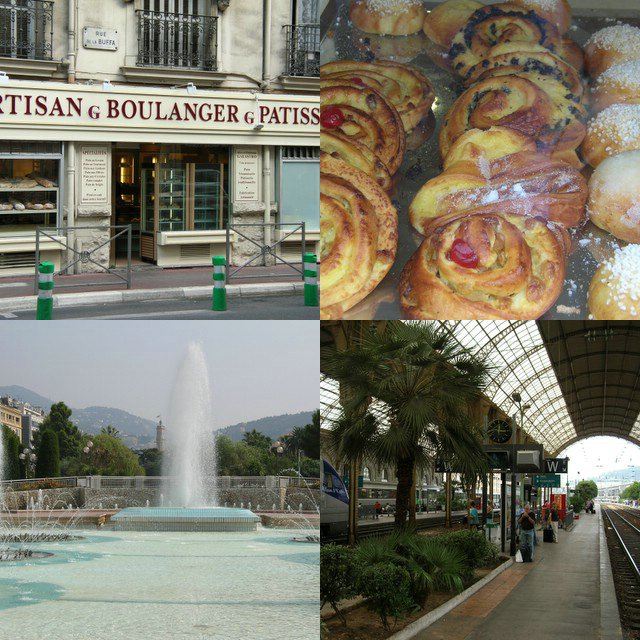
Clockwise from top left: The Bakery; The wonders therein; Nice's train station; A fountain near the waterfront


BAKERY: Artisan Boulanger Patisserie
LOCATION: Corner of Rue Dalpozzo and Rue de la Buffa, Nice, France
DATE: September 4, 2005
PASTRIES: Croissant filled with vanilla crème; Pain au Chocolate
PRICE: 2.05 Euros

An overnight train from Bordeaux to Nice leaves every night at 9:39 pm. It arrives in Nice the next morning at 7:55, an hour too early to check into most hostels. What to do in the void while your room is readied? You’re in France and it’s breakfast – is the answer really all that difficult to guess?

Pastries line the store windows and interior display cases of this artisan bakery, just minutes from Nice’s Rue de Anglais and scenic waterfront. And while croissants might not be the best food for sculpting an ideal beach bod, they sure a tasty way to chunk up.

The vanilla crème filled croissant, dusted in a layer of powdered sugar, was the essence of France. The pastry possessed of a feathery flakiness and that distinct, thoroughly buttery moistness inside. The crème filling was amazingly light, the breakfast equivalent of a Dan Brown novel. The pain au chocolate, shaped like a raisin croissant but with the substitution of life’s ultimate hedonistic splurge, French chocolate, was another deft exhibition of this bakery’s prowess. The pastry was as creamy as egg yolk, but with the density of marzipan. After a near sleepless night spent fitfully turning alongside babbling children and a surprisingly docile dog, there was no better way to start the day than by playing Nice at one of the city’s best bakeries.

RATING: 7.3/10
 Posted by Picasa

Monday, November 21, 2005

Europe 2: A Taste of France


Clockwise from top left: Bordeaux's San Michelle Cathedral; Canale, the local rum based specialty of Bordeaux - an amazing dessert; The Japanese Garden in Monaco; Changing of the guard in front of Monaco's Palace.


A Taste of France (and Monaco)

CITIES AND DATES: Bordeaux – September 1-3, 2005;
Nice – September 4-6, 2005;
Lyon – September 7-8, 2005;
Paris – September 9-13, 2005;
Avignon – November 9-10, 2005;
BREADS: Clawed Toasted Sesame; Sunflower and Corn Baguette;
PASTRIES: Drop (Vanilla Liquer Crème, Chocolate Chips, Almonds); Pistachio and Sour Cherry Cornbread
DESSERTS: Canale – rum pudding dessert, specialty of Bordeaux;
FRUITS: Red Plum Apples
HOSTELS: Bordeaux – Hotel Studio
Nice – Hostel Meyerbeer Beach
Lyon – Hotel Stars in Bron: Awful – like a cruise ship run aground, this sea themed hotel was dirty, cramped and most importantly, nearly an hour by tram Lyon’s center.
Paris – Hotel des Olympiades in Montmarte: The dingy, Bohemian hotels of Parisian yesteryear still exist. Rooms are shabby, with worn carpet and tattered, mismatched bedspreads. There is a single toilet and shower on each floor. The hotel fits the Moulin Rouge past of Montmarte, the take it as it comes, communal, no frills style evokes lonely writers laboring over their passion in the solitude of sweaty rooms.
GROCERY STORES AND MARKETS: Bordeaux – Auchan: Huge, amazingly cheap and inspirational. A testament of France’s ubiquitous love of food.
Lyon – Des Halles: the city’s largest indoor market was as haute cuisine as a market can get. Unfortunately, this also meant the prices were quite haute as well.
CATHEDRALS: Bordeaux – Basilique San Michelle and San Andre: San Michelle is a study in Catholic anachronism. While the church design and its most valued relics date from as early as the 15th century, the stained glass windows are fascinatingly modern. After the bombings of WWII destroyed the original windows, local artists created a new series of stained glass for the Basilica in the 1950s. Their design mixes cubist elements, reminiscent of Picasso, while still portraying classical and Biblical scenes. The amalgam of stylistics serves to capture not only the history of God, but the cathedral’s own story as well.
RANDOM: Bordeaux has great benches along the Rue Clemenceau in case you arrive so late that your hostel is already closed and end up having to sleep on a park bench. Good times.
Nice – Drinking champagne along the boardwalk late at night.
SITES: Paris – Musee d’ Orsay: The Louvre may have the Mona Lisa, but the Orsay has everything else. I fyou can resists the temptation to re-enact the scene in Godard’s “The Outsiders” when the threesome run though the Louvre in under ten minutes, the Orsay will provide smaller crowds and more stunning art. The museum itself is art, illuminated throughout on its perch on the Seine’s left bank. Time is a central focus of the Orsay’s design, with clocks modeled on art nouveau styles and train station inspirations overlaid on the museum’s windows. But the collection is the true astonishment, pieces by Van Gogh, Manet, Pisarro, Seurrat, Rousseau, and an extensive display of Monet’s life work. The Orsay is five floors of the premier French and Western European sculpture, paintings, and furniture from the last 200 years. It may not have the Louvre’s reputation, but perhaps that’s for the best. Plus, there’s discounted admission if you’re 18-25;
The Pompidou: Amazing – Based around large, ideological themes and not chronology, the collection was our favorite in Paris. Free guided tours in English on Saturdays at 3 pm; Art Market near the Rue des Martyrs in Montmarte; Notre Dame (of course, need I mention the Eiffel Tower); Tuilleries.
DAY TRIP: From Nice: Monaco – The epitome of wealth, privilege and luxury, Monaco’s rococo buildings practically rise right out of the sea. The views are mesmerizing, the streets remarkably clean, and the concentration of tourists, overwhelming. But the trip is worth it for the sight of the Palace’s white-suited guards to the surreal cliff and beach vistas. The Japanese Garden is a welcome and needed reprieve amidst the cities dense crowds. Though tiny, it’s a beautiful and serene greenspace.
BARS: Nice – Chez Wayne: Overpriced and like a “Girls Gone Wild Video” gone even wrong. The drinks cost too much, the seating is shabby, and the photos of girls revealing their chests seem less exotic than pathetic.
ODDS AND ENDS: Great public transport systems in both Bordeaux and Lyon, mainly utilizing the tram, but in Lyon, there is also an underground metro.
 Posted by Picasa

Saturday, November 19, 2005

Restaurant 68: La Barraca (Valencia, Spain)


Clockwise from top left: La Barraca; The Seafood Paella; One of El Greco's many masterpieces; The pigeons love the statue more than the toursits;


RESTAURANT: La Barraca
LOCATION: Las Arenas, near the beach, Valencia, Spain
DATE: August 29, 2005
FOOD: Seafood Paella
BEVERAGE: None
PRICE: 9.20 Euros

Olive oil, rice, and one huge skillet and you’ve got yourself a meal. Valencia is the birthplace of paella, that expand in your stomach like a blowfish, combine whatever ingredients you have lying around the kitchen, meal with machismo enough for Hemingway, rice experience. Served in an iron skillet only slightly smaller than the country of Luxembourg, paella is meant to be a communal feast, an entrée for an entire table to share.

La Barraca, located on a strip of Valencia’s beach front with as many Paella restaurants as the Conquistadores had infectious diseases, is more casual than many of its rivals, plastic outdoor furniture in place of the table clothes and hardwood chairs next door. But the paella is just as authentic as at the neighboring restaurants. After 30 minutes of anxious anticipation, the paella is brought tableside. The seafood variety had excellent mussels and decadently tender calamari. However, the prawns were stringy and the shrimp, flavorless. The saffron colored rice had been beautifully penetrated by the olive oil bath and possessed a buttery, melt-in-your-mouth quality. The rice attached to the sides of the pan developed a crispy char which had the succulent consistency of roasted garlic. While La Barraca’s paella might not thrust Valencia into the realm of elite world food cities, it certainty does its city proud.

RATING: 6.8/10
 Posted by Picasa

Restaurant 67: Bar Pilar (Valencia, Spain)


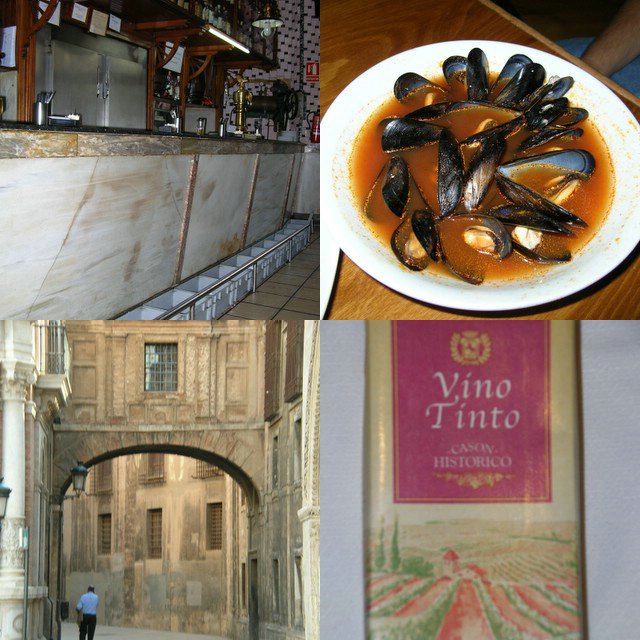
Clockwise from top left: The buckets on Bar Pilar's floor; Mussels in tomato broth; The cheapest wine Spain had to over - a liter box for 45 cents!; Afternoon in Valencia.


RESTAURANT: Bar Pilar
LOCATION: Calle Moro Zeit 13, Valencia, Spain
DATE: August 30, 2005
FOOD: Split the following: Mussels with Tomato Broth; Patatas Bravas; Black Pudding and Lomo Boccadilo; Ham Omelette Boccadillo
BEVERAGE: Glass of Marista Vino
PRICE: 8.25 Euros

The night before joining in Europe’s largest food fight seemed the appropriate time to try a restaurant where throwing food wasn’t only acceptable, it was downright encouraged. Bar Pilar’s reputation as an inexpensive but dependable tapas place frequented by locals came from the reliable Lonely Planet, Europe on a Shoestring, guidebook. Bar Pilar fit the description perfectly. Waited on by a kindly, middle aged man, who was most likely the owner, our meal was as low key as Bar Pilar’s simple, black and white tile décor. Danny and I decided to split an order of patatas bravas, two boccadillos (Spanish sandwiches) and the mussels for which Bar Pilar is known.

While throwing hundreds of tomatoes the next day at Tomatina 2005 was childishly addictive, the fact that the mussel shells we threw into buckets on Bar Pilar’s floor couldn’t be thrown back with harmful velocity gave the meal an advantage over its festive food competition. The mussels had a pleasant chew and the tomato broth served alongside gave a nice, salty gloss to the dish. While the patatas bravas couldn’t match those of Tia Pol, the dual layering of saucing, with heavy mayonnaise on top and pepper broth beneath, caused the crispy fried taters to have a surprising degree of complexity. However, both sandwiches were forgettable at best, unappetizing at worse, the omelette too oily, the black pudding like onion and mystery meat gruel and placed in bread that was noticeable for its American grocery store deficiencies, especially when compared to the other great breads we’d had in Spain. Thus, while Bar Pilar may have given our arms a warm up for Tomatina, it should have been the sandwiches and not the mussel shells that were tossed by the wayside.

RATING: 4.5/10
 Posted by Picasa

Friday, November 18, 2005

Restaurant 66: Al-Andalus (Granada, Spain)


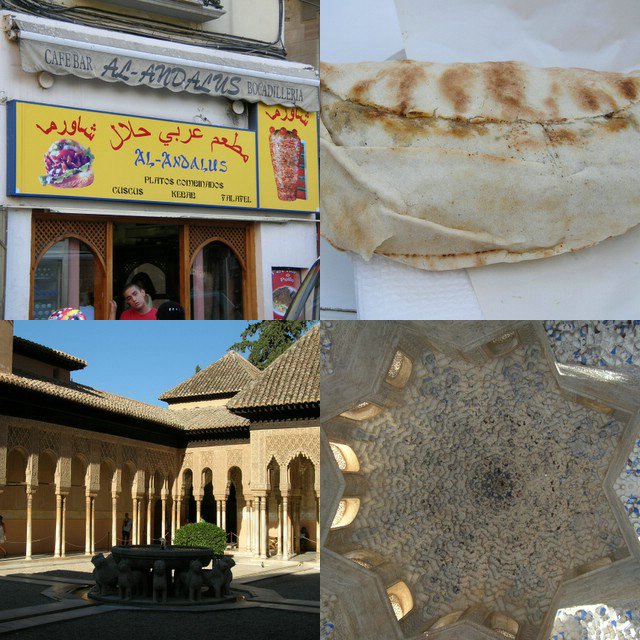
Clockwise from top left: Al-Andalus; The extraordinary chicken schwarma is wrapped up tight in the burrito like pita; A ceiling relief at the Alhambra; The famed courtyard and fountain at the Alhambra.


RESTAURANT: Al-Andalus
LOCATION: Calle de Elvira, Granada, Spain
DATE: August 25, 2005
FOOD: Chicken Schwarma
BEVERAGE: None
PRICE: 3.50 Euros

Street food in America usually consists of little better than hot dogs boiled in a murky, deformed liquid with a distant relation to water. Or there’s also over-sized, cardboard tasting pretzels. While the hot dogs would gain a certain cache if every vendor dressed in the same pirate outfit Ignatius Reilly wears in A Confederacy of Dunces, the character’s penchant for stuffing cats into the bun warmers would probably cause hot dogs to be even further from accepted health standards than they already are. In Europe, no costuming is necessary. Instead of hot dogs, there’s doner kebab and schwarma, much tastier alternatives to the States’ processed wieners.

In Granada, located in the Plaza Cuchillos directly across the hill that leads to the Alhambra, Al-Andalus takes schwarma street food to a new level of flavor. While the shredded, fatty strips of spit cooked chicken are familiarly pleasant to any gyro fan, it was the combination of the stuffed pita’s other elements which made Al-Andalus great. Inside the grilled pita (composed almost like a burrito), crunchy carrots and lettuce were a delicious compliment to the greasy meat. But it was the thick, ricotta cheese like yogurt saucing, wildly spiced and complex, which elevated the pita to monumental heights. And at just 3.50 Euros, it would be hard to imagine any reason, even old Ignatius himself, live and in person, to ever crave a hot dog again.


RATING: 7.6/10 Posted by Picasa

Just Desserts 15: Horno San Onofre (Madrid, Spain)

Posted by Picasa

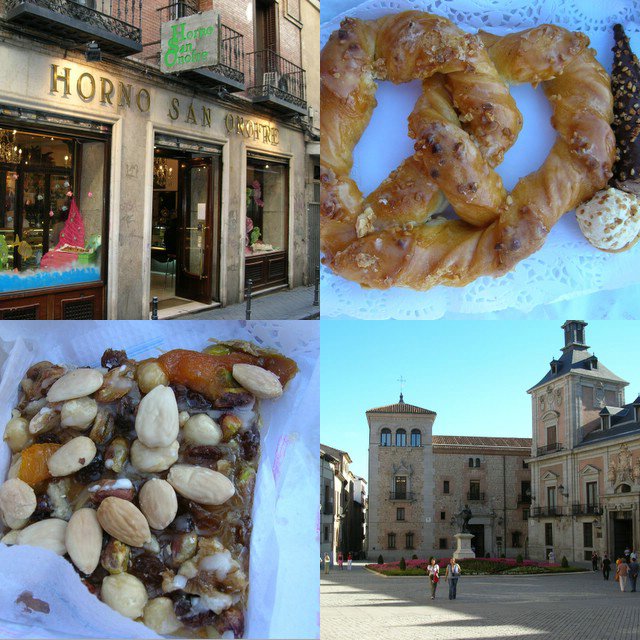
Clockwise from top left: Horno San Onofre; Pretzel and Chocolate Creme Cone; One of Madrid's countless plazas; "Coco".


JUST DESSERTS: Horno San Onofre
LOCATION: North of Plaza de Sol, Madrid, Spain
DATE: August 22, 2005
DESSERTS: “Coco” with mixed fruit and nuts; Tuna Empanada; Bite-size Spinach Quiche; Nut Glazed Pastry Pretzel; Chocolate Coated Cone Filled with Chocolate Cream; Bite-size Hazelnut Cream Pastry
PRICE: 7.00 Euros

What’s for dinner? The eternal question.

Don’t eat that, you’ll spoil your appetite. The eternal warning.

But if the first had an answer that nullified the need for even uttering the second – well wouldn’t that be a situation Liebniz might have described as the best of all possible worlds?

So dessert for dinner was the solution. Fatigued after taking in many of Madrid’s essential sites – from El Retiro to La Plaza Mayor – hunger weighed as heavy as a Valezquez painting over Danny and me both. It being seven, most of Madrid’s restaurants had another hour or more until dinner time, closed for one of the seemingly endless Spanish siestas. Instead of waiting, we opted to skip the savory and head right for the sweats.

Horno San Onofre had the upscale atmosphere of a West Village grocery, but without all the other foods mixed in. Though my intention had been to focus only on desserts, the temptation of Horno’s mini-quiches and meat stuffed pies proved too overwhelming. The quiche was simply riveting: cheese, cream, egg and spinach combining for a mouthful of buttery bliss. The tuna stuffed pie was like a pastry sandwich, and packed the robust flavors of tuna and onion with the delicacy of a flaky pastry casing.

But, these were the warm up acts. The featured performers came onto stage with the assured air of mastery and put on a show full of pyrotechnics. The “Coco” was like a mixed nut and fruit peanut brittle without the hardening and overly sugary glaze. The trail mix topping rested upon a soft and buttery crust, not unlike that of a pie. The sugar and nut glazed pastry pretzel was as light as William Gaddis’ prose is heavy and each puffy bite proved the combination of German engineering (the shape) and French style (the croissant like pastry) should occur elsewhere than Alsace-Lorraine. The bite-sized chocolate coated cone with chocolate crème filling illustrated why sometimes ice cream is simply unnecessary. And as for the hazelnut cream pastry, there’s little else this nut could be used for more advantageously.

In all, Danny and I had succeeded in not only spoiling our appetites but also in removing the need for dinner altogether. With France up ahead, another night of just desserts beckoned, though Horno would be a remembrance not soon to pass from memory.

RATING: 8.5/10

Restaurant 65: Museo de Jamon (Madrid, Spain)


Clockwise from top left: El Museo de Jamon in Madrid; Tortilla with Jamon y Manchego; All parts of the pigs. Man do Spaniards take their pork seriously; A display of pig parts in Barcelona's central market.


RESTAURANT: Museo de Jamon
DATE: August 21, 2005
LOCATION: Calle de Goya, Madrid, Spain
FOOD: Tortilla with House Ham and Cheese on Integral Roll; Pastry Espanade
DRINK: Water
PRICE: 5.00 Euros

The contemporary art world has changed the museum from a place only to show art into a work of art in itself. As countless literary theorists have pointed out, the aesthetic line separating what hangs on the walls and the very walls on which they hang has largely been obliterated. The avant-garde’s legacy has been less to show us how art is everywhere around us, but rather the very subjectivity of what we consider art in the first place.

Well who knows how Duchamp or even Picasso would have responded to the numerous Madrid locations of El Museo de Jamon. For at this museum, the art is edible and it comes prepared by the strong, yet loving hands of burly Spanish butchers. The museum could be seen as a testament to Spain’s love of all things pork. Whole cured hams hang from the ceiling, seeming to number in the hundreds, like the finest vintages in a wine cellar. The choices of pork at the Museum is astonishing, but the house speciality, more like a pancetta than jamon is why the museum deserves its lofty name.

The pork is the color of dark cherries. The meat possess the perfect level of saltiness and while adequately tender, forces the diner to chew with concentration in greedy indulgence. Sewed into the puff embrace of a Spanish tortilla, lined by Manchego sheep’s cheese, there can be few things more authentically Spanish or more divinely pleasurable. If all contemporary art was as enjoyable, the world’s museums would seem far less austere. But any place with the gall to name itself the museum of any meat, let alone ham – well you know it’s got to be good.

RATING: 7.7/10 Posted by Picasa

Thursday, November 17, 2005

Restaurant 64: Edelmann's Cafe (Barcelona, Spain)


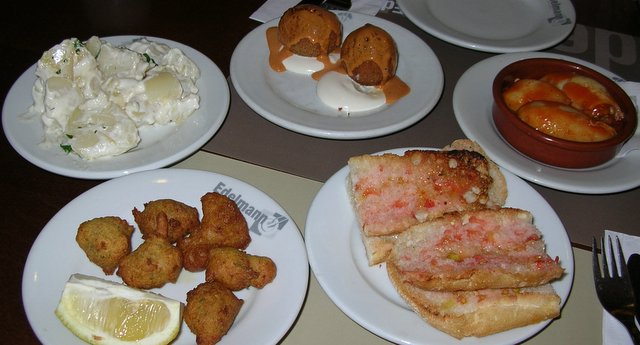
From top left: Potatoes Aeoli, Hot Bomb, Stuffed Squid, Bruschetta, Cod Fritters.


RESTAURANT: Edelmann's Cafe
DATE: August 20, 2005
LOCATION: Barcelona, Spain
FOOD: Potatoes with aeoli, Hot Bomb, Stuffed Squid, Bruschetta, Fried Cuttlefish, Tortilla with Spinach, Mushrooms sauteed with ham; liquor based dessert tarte
DRINK: Beer
PRICE: 17 Euros

Exhausted and hungry after a day of touring Barcelona's array of memorable sites, we sought a taste of tapas to cap off the evening. Cal Pep was closed for the month of August, a disappointing turn of events that it would take until November, when our trip was over, for us to rectify. Near the Plaza d'Catalunya, we found Edelmann Cafe, where a deceptively unaffordable and subpar meal ensued. While the cod fritters were crunchy and only slightly oily, the potatoes with aeoli sauce were a disastrous blend of boiled root vegetable and underseasoned globular mayonnaise. The spinach tortilla (Spanish omelette) proved unassuming if not downright bland and the mushrooms sauteed with ham were a dish even the most novice chef could prepare better.

The lone redeeming tapas were the complex potato and meet "Hot Bombs", covered in paprika laden dressing and the Andalucian style cuttlefish, wich tasted as authentically Spanish as their title suggested. However, even a generous does of liquor as saucing couldn't save the dessert tarte from its dry, flavorless self. With a pricetag that reached seventeen Euros a person for six incredibly mediocre tapas, Edelmann's was a bad introduction to eating out in Spain.

RATING: 3.0/10


Posted by Picasa

Europe 1: A Taste of Spain


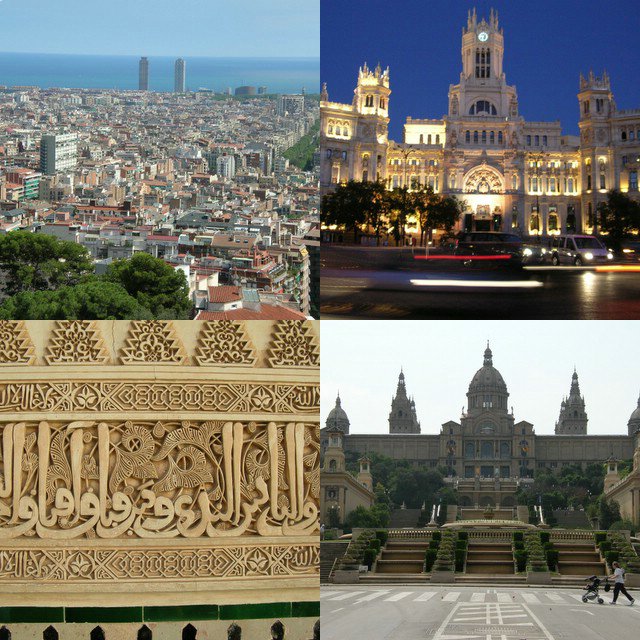
Clockwise from top left: Barcelona from Parc Guell; The Palace of Communication in Madrid; The Royal Palace in Barcelona; A Wall Tile in The Alhambra, Granada.


A TASTE OF SPAIN

CITIES AND DATES: Barcelona – August 15-20, 2005 and November 10-12, 2005;
Madrid – August 20-24, 2005;
Granada – August 24-28, 2005;
Valencia – August 28-31, 2005
BREAD: Integrale; French Style White Baguette; High Fiber Bread in Granada (perhaps too much of a good thing)
RESTAURANTS: (reviews forthcoming) Barcelona: Café Edelman;
Madrid: Horno San Onofre (Pastry Shop);
Granada: Al Andalusa; Bar Pilar;
Valencia: La Barrasca
MARKETS: Barcelona: El Mercat de Boqueria;
Granada: Mercat St. Augustin
PORK: Chorizo, Lomo
WINE: .45 Euro cent box of
CHEESE: Sheep’s Milk Cheeses, especially Manchego
FRUIT: Meloncoton (peaches) at the peak of flavor
HOTELS: Barcelona: Hesperia Sant Juis;
Madrid: NH Parque de Avenidas;
Granada: Hostal Alcazaba;
Valencia: NH Hotel
RANDOM FUN: Granada: Kashbar – A fantastic tea house with nightly belly dancing exhibitions; Caves in Sacremento (Granada) – Above the city, gypsies inhabit caves in the hills overlooking the city; Bunol: Tomatina – You may never want to see a tomato again after the festival but the craziness is a once in a lifetime even to behold.
ESSENTIAL SITES: Barcelona: La Sagrada Familia, Montjuic, Parc Guell, Las Ramblas;
Madrid: El Prado, El Retiro, Plaza Mayor, Plaza Sol;
Granada: Alhambra
ODDS AND ENDS: Reservation fees for trains add up in the summer, even if you have the Eurail pass; EVERYTHING is closed in August, from restaurants like Cal Pep, to many stores and even some museums; The Prado is free on Sundays.
 Posted by Picasa

Monday, November 14, 2005

Europe

From August 28, 2005 to November 12, 2005, I backpacked around Europe, starting in Barcelona and moving eastwards. Upcoming on this blog with be an account of that adventure.

Sunday, November 13, 2005

Restaurant 63: Nizam's (Vienna, Virginia)


Doner Kebab: The lone bright spot of the meal.


RESTAURANT: Nizam's
LOCATION: 523 Maple Avenue West, Vienna, VA
DATE: August 13, 2005
FOOD: Split the mezze plate including Hummus, White Bean Salad, Borek (Fried Cheese), Feta Cheese, Olives, Yogurt covered Eggplant; ENTREE: Doner Kebab (Thinly sliced lamb with dill, covering a grilled pita and yogurt toped with tomato sauce); DESSERT: Dessert Sampler including Baked Pear, Baklava, Milk and Honey Sponge Cake.
BEVERAGE: Pasha Martini, Argentinian Red Wine
PRICE: Courtesy of my mom


As Europe turns inward and the EU’s xenophobia convulses like an epileptic seizure, the probability that Turkey will gain admittance to the unified Western nations becomes increasingly remote. Since the fall of the Ottoman Empire and the rise of Ataturk, Turkey has embraced a precarious Western secularization, unique amongst its neighbors. While the EU’s desire to include Turkey wanes, the tremendous and intricate culture of Turkey is overlooked for economic reasons.


One furtive aspect of this culture is the cuisine. Reminiscent of Greek, Lebanese, and other Mediterranean nations, Turkish food centers around roasted and skewered meats, pureed vegetable dips, robust cheeses and honey laden desserts. Nizam’s, a Vienna establishment honored with a place amongst Washingtonian’s Top 100 restaurants for 21 consecutive years, attempts to drape Turkish cuisine in all the elegance and regality of the Europe which keeps the country at arms length. While it takes kebabs above the street cart form, Nizam’s, can’t quite succeed in being the refined European it seeks to be.

The house specialty is the doner kebab. Similiar to the Greek gyro but with a greater diversity of spices, ground lamb is roasted on a spit and then sliced paper thing. In Germany, doner kebab elevates street food to a rarefied level. In Vienna, Virginia, the meat comes on the pita instead of in it, but the taste is just as marvelous. The dish is richly layered – the lamb pieces rest atop pita bread softened by meat drippings and are lathered in a fragrant dill yogurt. The meat is then gently brushed with a forceful tomato sauce. This tiered trio comes off at great effect, producing a creamy and acidic contrast for the succulence of the meat.

But it was in the appetizers and desserts that Nizam’s was closer to stumbling than to Suleiman imperial dominance. A boring mixed mezze plate with the sole highlight of yogurt covered eggplant, left a lot to be desired. The hummus was bland, the feta under salted, the borek forgettable and the white bean mix regrettably cold. The mixed dessert plate was similarly misconstrued, with a commendable baklava backstabbed by a tasteless baked pear and a gelatinous milk and honey custard cake. Combined with service that was more distant than the Dead Sea, Nizam’s excellent doner kebab could not compensate for an otherwise uninspired meal. Fortunately, the nation of Turkey has a lot more to offer Europe than Nizam’s can offer diners. The only question left to ask: Why does Washingtonian view the restaurant so positively?

RATING: 4.8/10

Thursday, August 18, 2005

Book 18: After the Quake, by Haruki Murikami

Paperback: 160 pages
Publisher: Vintage; Vintage edition (May 13, 2003)

Americans may find all too familiar the angst haunting the characters in Haruki Murikami´s collections of six stories, After the Quake. In each story, a tumultuous event provides ample reason for buried fears to rise to the surface consciousness of the an individual character. In one instance, catastrophe escaltes the progres of a love stalled by years of friendship. In another, the earthshaking event leads a woman to reconsider her life and her punctuated hatred of her ex-husband. But in all the story, Murikami´s characteristic masterful use of simple language for profound ends allows the author evoke a sensitivity and passion in not just his characters, but the reader as well.

Murikami is perhaps the foremost Japanese novelist. His works include Hard-Boiled Wonderland and the End of the World along with the novel generally regarded as his masterpiece, The Wind-Up Bird Chronicle. But After the Quake, provides a rare glimpse of the novelist in short story form. It is a glimpse full of promise and reward and thoughts with a universal applicability.

Americans may recognize the scnearios faced by Murikami´s characters, but few will have deep knowledge of the tragedy involved. The Kobe earthquake wrought havoc on the Japanese city when it struck in 1995, measuring a devastating 6.9 on the Richter scale. It had the same type of effect on Japanese life as 9/11 did for many Americans. What had seemed stable was suddenly undermined and frighteningly ephemeral. What foundations were left? Who was to blame, how to prevent another such tragedy, when the "enemy" was so evasive? It is the fear of living that Murikami tackles in the foremost, his six stories exploring how people come to deal with fear and go on living even as they are forced to realize every moment could be their last.

Unlike many short story collections, each story in After the Quake is a unique entity on its own, while tying into the work´s larger thematic emphasis. In "Frog Saves Tokyo", the main character is beset upon by a Gregor Samsa like gigantic Frog to battle the devil earthwarm that will cause an earthquake beneath Tokyo like no natural disaster before. However, in the longest story, "Honey Pie", Murikami is much less fantastical, dealing with love and the classic Hamlet paradox of inaction versus action. Fear, whether personal or in the form of a potential destroyer, may lead us to turn in ourselves to seak safety, but disengaging from the world rarely provides us with the answers we´re looking for. In the end, what arises most from Murikami´s wonderful and entertaining stories are the human ability to persevere despite horrendous circumstances and a willingness to face life head on. As his stories suggest, Murikami sees avoiding life as being as frightful as anything mother nature can muster.